Recycling and Sustainability at Holland Park Removals
 At Holland Park Removals, sustainability is built into the way we plan, pack, transport, and dispose of items. Our recycling-focused removals service is designed to reduce waste at every stage, with a practical target of diverting at least 85% of suitable materials from landfill through reuse, recycling, and responsible recovery routes. In an area where boroughs place strong emphasis on waste separation, household recycling streams, and reducing contamination, we align our approach with local expectations by sorting items carefully before they leave the property. That means making sensible distinctions between wood, metal, cardboard, textiles, small electricals, and reusable household goods. For clients moving within or out of the borough, this approach helps ensure that the environmental impact of a move is kept as low as possible.
Our recycling and sustainability practices begin with a simple question: what can be reused, what can be recycled, and what should be handled separately? We work with a structured process so that suitable items are not mixed together unnecessarily. This is especially important in London, where transfer stations and borough recycling rules often require clear sorting of materials. By preparing loads in advance, our team can route recyclable items to the right facilities, making it easier to capture metal, paper, cardboard, rigid plastics, and untreated timber. This careful handling supports a cleaner waste stream and helps prevent recyclable materials from being lost in general rubbish.
 We also recognise the role of local transfer stations in responsible waste management. Depending on the load, we use approved local transfer stations and recycling facilities that are set up to separate and process mixed removal waste efficiently. These facilities are valuable because they can recover materials at scale, including bulky household waste, packaging waste, and items from decluttered rooms or offices. In practice, this means our Holland Park removals work is not just about moving possessions from one place to another; it is also about ensuring unwanted items are directed toward the most appropriate next step. The result is a smoother, greener, and more accountable process for every move.
Partnerships with charities are another important part of our sustainability model. When items are in good condition, we prioritise donation routes over disposal wherever possible. Through charity partnerships, we help furniture, homeware, books, and other reusable belongings find a second life with people who can benefit from them. This can include wardrobes, tables, chairs, storage pieces, and everyday items that still have useful service ahead. In a busy London setting, this reuse-first mindset reduces pressure on recycling systems and gives clients a more responsible option when clearing a home, flat, or workspace. It is a practical way to make sure that not everything unwanted becomes waste.
 Our approach to recycling at Holland Park Removals also reflects the realities of borough-level waste separation. Across west and central London, residents are increasingly expected to sort dry mixed recyclables, food waste, textiles, and electricals carefully. We support that same principle during moves by separating materials early and avoiding unnecessary contamination. For example, cardboard from packing, wrapping paper, and certain plastic packaging may be prepared differently from damaged furniture or mixed junk. Items such as fridges, computers, and other WEEE products are handled with extra care because they require specialist recycling routes. This attention to detail makes our service more efficient and more environmentally sound.
We also invest in low-carbon vans to reduce emissions during collections and deliveries. Our vehicle choices are focused on efficiency, cleaner running, and reducing unnecessary fuel use across local routes. In a neighbourhood like Holland Park, where journeys are often short but frequent, lower-emission transport makes a meaningful difference over time. Our fleet planning aims to cut idle time, consolidate trips where appropriate, and choose the right vehicle size for each job so that no more road space or fuel is used than necessary. This is a core part of our broader commitment to sustainable removals in London.
Alongside transport and sorting, we encourage a circular approach to decluttering. That means considering repair, reuse, resale, donation, and recycling before disposal. During a move, it is common to uncover surplus items that no longer fit the next property, and many of these can still be valuable elsewhere. By identifying reusable goods early, our Holland Park removals team can separate them from recycling loads and direct them toward the right channel. This helps reduce waste volumes, improves recovery rates, and supports a more efficient service for clients who want their move handled responsibly. It also reflects the wider London shift toward keeping materials in use for as long as possible.
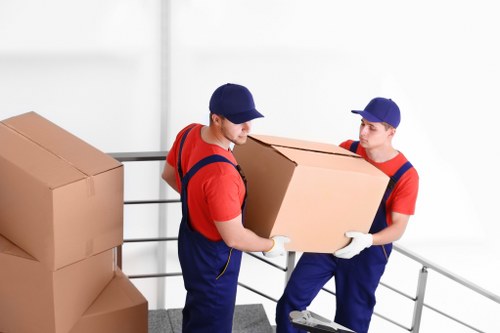 In addition to standard household items, we pay attention to special streams such as textiles, small appliances, and mixed office materials. Where borough guidance encourages separate collection or specialist processing, we follow a similar principle within our own operations. That is particularly useful for moves involving refurbishment waste, packed storage rooms, or office clearances, where the contents can vary widely. By classifying items correctly, we improve the chances of recycling and help reduce the amount that ends up as residual waste. This method is simple, but it has a significant effect on overall sustainability performance.
 Ultimately, Holland Park removals and recycling go hand in hand. From charity rehoming and local transfer station use to careful separation of recyclable materials and low-carbon vans, every part of the process is designed with environmental responsibility in mind. Our recycling percentage target gives us a clear standard to work towards, while our practical systems make that standard achievable in day-to-day work. For clients who want a move that supports reuse, reduces landfill, and respects London’s waste separation culture, this sustainable approach offers a reliable and thoughtful solution.