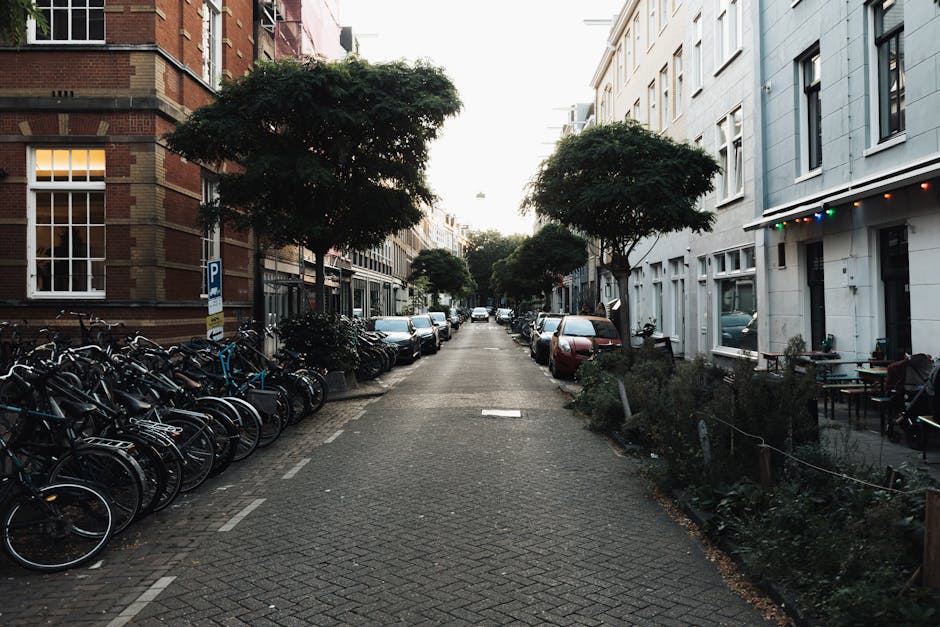
Holland Park Avenue House Removals Guide for Narrow Streets
Moving house on Holland Park Avenue can look straightforward on a map, and then reality arrives: tight carriageways, parked cars, awkward corners, period properties, basement steps, and the kind of access problem that only seems to appear on moving day. If you are planning a Holland Park Avenue house removals guide for narrow streets, the real challenge is not the distance. It is the access.
That is why this guide goes beyond the usual "pack early and label boxes" advice. It focuses on how narrow streets change the whole moving process, what to check before the van arrives, how to protect furniture and time, and how to avoid the little mistakes that turn a normal move into a long, frustrating day. Truth be told, most removal problems in this part of London are preventable with the right planning.
If you want to compare service types while you plan, it can also help to look at the full range of removal services in Holland Park and decide whether you need a full team, a van-only solution, or something more flexible. Either way, the key is to make the street work for you, not against you.
Why Holland Park Avenue house removals guide for narrow streets Matters
Holland Park Avenue sits in one of those London pockets where the road layout can change everything. The street itself may be busy, but the surrounding residential roads are often narrower than people expect, and the properties can present their own access issues. A move that would be simple elsewhere can become awkward here because of limited stopping space, busy traffic flow, and the fact that some homes were never designed with modern furniture in mind.
Why does that matter? Because removals are all about momentum. If the van cannot get close enough, if the sofa will not turn on the stair landing, or if the team has to carry boxes too far, the schedule slips. Costs can rise. Stress goes up. And the best-laid plan suddenly feels like a minor battle.
There is also a local texture to this area. Many homes in and around Holland Park have period features, tall ceilings, narrow hallways, and delicate finishes. Lovely to live in, yes. A little tricky when you are shifting wardrobes and table tops around on a wet Thursday morning? Also yes.
A thoughtful move plan matters because it helps you:
- reduce delays caused by access constraints
- protect furniture and walls from scuffs and knocks
- coordinate parking and loading more efficiently
- avoid last-minute panic when the van arrives
- choose the right team and vehicle for the street conditions
For many households, the bigger question is not whether to move, but how to do it without making the day harder than it needs to be. That is the whole point here.
How Holland Park Avenue house removals guide for narrow streets Works
In practice, a narrow-street move is a coordination exercise. The removal team, the vehicle, the packing, the parking, and the property access all need to line up at the same time. If one part is off, the rest feels it.
Typically, the process starts with an access assessment. That may be done from photos, a video walkthrough, a site visit, or a careful conversation about street width, staircases, lift availability, and what needs to be moved. This is where details matter. A grand piano, a marble dining table, or a large wardrobe may need special handling. If so, a service such as piano removals in the local area can be relevant even if the rest of the move is fairly standard.
After that, the removal plan should cover the vehicle size, the order of loading, protection materials, route timing, and any possible restrictions. Sometimes a smaller vehicle or a man and van service in Holland Park is more practical than a larger lorry. In other cases, a full crew is better because you need speed, lifting capacity, and better control inside tight hallways.
For flats and upper-floor homes, narrow streets create a double challenge: external access and internal access. This is why flat removals in Holland Park often need a more precise plan than a standard house move. Stairs, intercoms, shared entrances, and neighbour considerations all come into play.
Put simply, narrow-street removals work best when everyone knows the route, the timing, the load order, and the pinch points before the first box is lifted.
Key Benefits and Practical Advantages
A well-planned move in a narrow street is not just about avoiding problems. It also gives you a few genuine advantages, and people often underestimate that.
- Less wasted time: when parking, carrying, and loading are mapped out properly, the day runs more smoothly.
- Lower damage risk: fewer rushed turns, less bumping furniture into door frames, and better use of protection materials.
- Cleaner organisation: the team can work through rooms in a sensible sequence instead of improvising on the pavement.
- Better budget control: fewer delays usually mean fewer surprises, especially if your quote depends on time or crew size.
- Less neighbour friction: good planning reduces noise, congestion, and the "who parked here?" moment that nobody enjoys.
There is also a calmer psychological benefit. Once you know the access plan is realistic, the move stops feeling vague. You are no longer hoping the van will fit; you know how it will be handled. That sounds small, but on moving day it makes a real difference.
Expert summary: In narrow London streets, the best removals are rarely the fastest on paper. They are the ones that combine accurate access planning, sensible vehicle choice, and disciplined packing. That trio beats last-minute heroics every time.
Who This Is For and When It Makes Sense
This guide is especially useful if you are moving from or to a home on or near Holland Park Avenue and any of the following sound familiar:
- the road outside is tight, busy, or difficult to park on
- you live in a townhouse, basement flat, maisonette, or converted period property
- your furniture includes bulky, fragile, or awkward items
- you are moving with children, pets, or strict time windows
- you want to avoid blocking traffic or irritating neighbours
- you need a service that is more local and responsive than a generic national booking line
It also makes sense for people who are comparing different moving setups. For example, a student with a few boxes and a bed frame may only need student removals in Holland Park, while a family moving out of a multi-room house probably needs a fuller service with packing support. If you have a larger property and several heavy items, then furniture removals in Holland Park may become part of the plan rather than an add-on.
And if you are still deciding whether to use a professional firm at all, it can be sensible to compare local removal companies in Holland Park before you commit. Some people need full-service support. Others just need a reliable team with the right size van and enough street awareness not to make the day harder than it needs to be.
Step-by-Step Guidance
Here is a practical way to approach a narrow-street move on Holland Park Avenue without making it overly complicated. You do not need to over-engineer it. You just need to be methodical.
1. Check access from both ends
Look at the departure property and the destination property separately. Can a vehicle stop nearby? Is there room to unload without causing a traffic issue? Are there gates, steps, bollards, or one-way restrictions? Even a short walk from the van to the front door can change the whole moving plan.
2. Measure the awkward items first
Don't start with boxes. Start with the sofa, wardrobe, fridge, mattress, piano, or desk that might be a problem. If the biggest items can get through the door, the rest usually feels easier. If they cannot, that is the point where you arrange dismantling or specialist handling, not on the morning itself. A tiny bit of prep saves a lot of muttering later.
3. Build a loading order
In narrow streets, loading order matters. Load the heaviest and least fragile pieces first, then stack in a way that protects corners and creates a stable base. Keep essentials accessible. The last thing you want is to bury kettle, chargers, and documents under six boxes of books. Been there? Most people have, once.
4. Plan the parking and timing window
If parking is tight, think carefully about arrival time. School runs, rush hour, bin collection, and weekend foot traffic can all affect how easy the street feels. A half-hour difference can genuinely matter. If the property is in a busy strip, a smaller vehicle or a staggered move may be the better option.
5. Protect property as well as possessions
Good removals are not only about the boxes. Hallway corners, banisters, floors, and doors deserve protection too. Use blankets, covers, tape that will not damage finishes, and furniture pads where needed. If the building has communal areas, treat them with extra care. That sounds obvious, but you would be surprised how often people forget the shared stairwell until it is too late.
6. Keep one clear point of contact
On moving day, too many voices can slow everything down. One person should be able to answer questions, confirm priorities, and make decisions fast. If the team needs to know whether the dining table or the bed frame comes first, the answer should come quickly.
7. Leave a buffer for the unexpected
In a narrow street, small disruptions are normal. A delivery van can block access for ten minutes. Someone may have parked where they should not. The lift may be slower than expected. Build in a buffer so one hitch does not throw out the whole day.
Expert Tips for Better Results
These are the things that make a real difference, especially in places where the street layout is not especially forgiving.
- Do a quick photo audit: send pictures of stairs, entrances, cupboards, and the biggest furniture pieces before the quote is finalised.
- Use colour labels: room labels are helpful, but colours make unloading faster when everyone is tired and looking at a mountain of boxes.
- Disassemble what you can: flat-pack furniture and bed frames are easier to move in sections than as a wobbling whole.
- Keep a slim "first night" bag: toiletries, chargers, tea, snacks, documents, and a change of clothes should travel separately.
- Protect floor paths: especially if the weather is wet, because London pavements do have opinions of their own.
- Choose the right vehicle size: bigger is not always better if the street is tight. Sometimes a smaller van is simply the smarter call.
If you need packing support, packing and boxes in the local area can save a lot of stress, particularly when glassware, books, artwork, and kitchen items need careful wrapping. The neat thing about good packing is that it pays back twice: less damage risk and faster unloading. Handy, really.
One more practical point: if you are moving from a property with a more complicated access route, such as a rear entrance, basement stairwell, or shared lobby, take the time to walk the route before move day. Not once. Twice if needed. The route that looks "fine" in daylight may feel very different with a trolley and a full mattress at 8 a.m.
Common Mistakes to Avoid
Narrow-street removals tend to go wrong in predictable ways. The good news is that once you know the pattern, you can avoid most of them.
- Assuming the van can park outside: this is the classic mistake. A street may look wide enough from a car window and still be a nightmare for loading.
- Ignoring internal bottlenecks: the front door may be fine, but the stair turn could defeat a large wardrobe.
- Booking too late in the day: later slots often collide with traffic, parking pressure, and neighbour movement.
- Underestimating packing time: people always think the kitchen will be quick. It rarely is.
- Not declaring fragile or valuable items: hidden risks create rushed handling. Better to say it upfront.
- Forgetting building rules: some blocks and managed properties have specific moving procedures, lift booking rules, or quiet hours.
One small but costly habit is leaving loose items for the final hour. Lampshades, picture frames, odd cables, and drawer contents create clutter exactly when clarity matters most. Pack them early. You will thank yourself later, probably while holding a mug of tea in an almost empty kitchen.
Another mistake? Choosing a service based only on price without checking whether it is suited to tight access. A cheaper quote can be poor value if the team arrives with the wrong vehicle or no plan for a narrow street. The quote should reflect the actual job, not just the postcode.
Tools, Resources and Recommendations
You do not need a huge toolkit, but the right tools make a move less chaotic. Here is a sensible list for narrow-street removals around Holland Park Avenue.
- Furniture blankets and corner protectors: essential for door frames, banisters, and polished surfaces.
- Strong tape and labels: keep boxes closed and clearly marked.
- Dolly or trolley: useful for heavier boxes, but only if the route is smooth enough.
- Mattress covers and sofa wraps: especially helpful if there is any outdoor carrying in damp weather.
- Basic toolkit: screwdrivers, Allen keys, and spare bags for fixings.
- Floor protection: particularly useful in properties with original wood or light-coloured finishes.
It can also help to review a few related pages before you book. If you want a broader sense of what is available locally, removals in Holland Park gives a useful overview, while a removal van in Holland Park may suit smaller or more straightforward loads. For more local context, resident perspectives on Holland Park living can help you understand the area's character and day-to-day realities.
If you are moving into the area rather than out of it, this property guide for Holland Park is worth a read. And if you simply want a feel for the neighbourhood before move day, this piece on Holland Park as a suburban oasis is a decent companion. It helps, honestly, to know the rhythm of the place you are moving into.
Law, Compliance, Standards and Best Practice
For a home move in a busy London area, the most important compliance issues usually relate to safe loading, parking awareness, property access, and responsible handling of goods. Exact requirements can vary depending on the street, the council, the building management, and the service booked, so it is wise to check details rather than assume.
From a best-practice point of view, a professional removal team should be able to discuss:
- how they manage manual handling and lifting safely
- what protection they use for walls, floors, and furniture
- whether insurance arrangements are in place for the work involved
- how they communicate parking or access constraints
- what happens if a delay or access issue changes the plan
If you are comparing providers, it is sensible to review insurance and safety information and the company's health and safety policy. Those pages should help you understand how a team approaches risk, not just how they market themselves.
Payment transparency also matters. A clear process for deposits, final invoices, and secure transactions is a good sign, so it may be worth checking payment and security details before confirming anything. And if you want to understand how terms are handled, the terms and conditions page is worth a proper read. Not glamorous, perhaps, but very useful.
For environmentally conscious moves, some customers also like to know how waste and unwanted items are handled. If that matters to you, take a look at recycling and sustainability practices. It is a small part of the move, but a meaningful one.
Options, Methods, or Comparison Table
Different narrow-street moves call for different approaches. The right method depends on how much you are moving, how tight the access is, and how much support you want on the day.
| Option | Best for | Pros | Possible drawbacks |
|---|---|---|---|
| Full removal service | Family homes, larger moves, fragile items, tight stair access | More hands, faster loading, better for complex access | Usually the highest cost option |
| Man and van | Smaller homes, lighter loads, short-distance moves | Flexible, often practical for narrow streets | May be less suitable for large households or heavy furniture |
| Removal van only | People with some help already arranged | Can be efficient if you do the lifting yourself | You need to manage more of the physical work |
| Specialist item move | Pianos, antiques, oversized furniture, delicate pieces | Tailored handling for high-risk items | Requires more planning and sometimes a separate booking |
If you are not sure which route suits you, think about the bottleneck rather than the label. A compact flat with a single difficult item may need more expertise than a bigger house with easy access. That is where a local discussion with a team can save time and money. For an overview of service combinations, removal services in Holland Park is a sensible starting point.
Case Study or Real-World Example
Here is a realistic example based on the kind of move people often make in this area.
A couple were moving from a top-floor flat just off Holland Park Avenue into a nearby house on a narrower residential street. On paper, it was a short move. In practice, there were two awkward stair turns, a parking pinch point, and one large wardrobe that had to be partially dismantled before it would clear the landing.
They did three things well. First, they sent photos of the stairs and entrance before booking. Second, they packed the kitchen early and marked a separate essentials box. Third, they booked a smaller vehicle with enough crew support to handle the loading quickly. The actual move still had its moments - there is always one item that behaves like it has a personal grudge - but the day stayed controlled and completed without the usual scramble.
What made the difference was not luck. It was recognising the access issue early and planning around it.
If you are handling a more specialist move, such as a piano or a house with expensive furniture, that same principle applies even more strongly. In tight streets, precision beats optimism. Every time.
Practical Checklist
Use this checklist in the week before your move. It is simple, but it catches the things people forget when life gets busy.
- Confirm the full address and access points at both properties
- Check whether parking or loading restrictions could affect the vehicle
- Measure large furniture and identify items needing dismantling
- Pack fragile items with enough cushioning
- Label boxes by room and priority
- Set aside documents, chargers, medication, and valuables
- Protect floors, corners, and banisters where needed
- Tell neighbours or building management if the move could affect shared access
- Keep keys, phone, and payment details easy to reach
- Allow extra time for delays, especially in narrow streets
Quick reminder: if you are comparing services, a local team that understands access constraints will usually save you more time than a generic operator that only knows the postcode. That is the quiet truth of it.
Conclusion
A move on Holland Park Avenue, especially where narrow streets are involved, is rarely difficult because of one huge issue. It is usually the combination of several smaller ones: parking, access, stair turns, bulky furniture, and timing. Once you treat the move as an access-led job rather than a simple transport job, everything gets easier to manage.
The best results come from early planning, clear communication, realistic vehicle choice, and careful packing. If you do those things, you dramatically reduce the chance of damage, delay, or unnecessary stress. And that matters, because moving home is already a big enough day without adding avoidable headaches.
Whether you are arranging a family move, a flat relocation, or a specialist item transfer, the smartest next step is to match the service to the street. That is the whole game, really.
Get a free quote today and see how much you can save.
And if you are still exploring the area or planning your next chapter here, take your time. A good move should feel like the start of something solid, not the end of your patience.
Frequently Asked Questions
What makes Holland Park Avenue narrow-street removals different from a normal house move?
The main difference is access. In narrow streets, vehicle size, parking, loading distance, and turning space can affect the whole day. Even a short move can take longer if the van cannot get close to the property.
Should I choose a bigger van or a smaller one for a narrow street?
Usually, the best option is the one that can safely access the property without blocking traffic or causing loading problems. Bigger is not always better. In some cases, a smaller van or staggered loads work far more smoothly.
How far in advance should I book a removals team for Holland Park Avenue?
As early as you can, especially if your move involves tight access, specialist items, or a preferred date. More time gives you a better chance to arrange the right vehicle and avoid last-minute compromises.
Do I need to measure furniture before moving day?
Yes, especially for sofas, wardrobes, beds, dining tables, and anything awkwardly shaped. Measuring helps avoid surprises at the door, stairwell, or landing. It is one of the simplest ways to prevent delays.
What if my building has a lift or shared entrance?
That can help, but it still needs planning. Check whether the lift is available, whether it needs booking, and whether there are rules about protecting communal areas. Shared access often needs more care than people expect.
Can a removals team help with packing as well?
Yes, many can. If you want less pressure in the run-up to the move, packing support is often worth it, especially for kitchens, fragile items, or rooms with lots of loose belongings.
What should I do if parking near the property is limited?
Discuss it early with the removals company. They may suggest a smaller vehicle, a better arrival time, or a different loading setup. Narrow streets are easier to manage when parking concerns are built into the plan from the start.
Are specialist items like pianos or antiques harder to move in narrow streets?
Usually, yes. They need extra care, extra protection, and sometimes specialist handling. If you have a valuable or unusually heavy item, mention it before booking so the team can plan properly.
How can I reduce the risk of damage during a narrow-street move?
Use proper packing materials, protect furniture edges, clear walkways, and make sure the team knows about any tight corners or fragile finishes. Damage often happens when people rush or guess instead of planning.
Is a man and van service enough for a move on Holland Park Avenue?
It can be, if the load is modest and the access is manageable. For larger homes, heavy furniture, or more complex stairs, a fuller removals service is usually the safer and more efficient choice.
What should I check before confirming a quote?
Check what is included, how access issues are handled, whether insurance and safety arrangements are clear, and whether the vehicle size matches your street. A quote is only useful if it reflects the real moving conditions.
Where can I learn more about moving and living in Holland Park?
You can explore local pages such as resident perspectives on Holland Park living, homes for sale in Holland Park, and ideal venues for events in Holland Park. They give helpful local context if you are settling in or planning a move nearby.